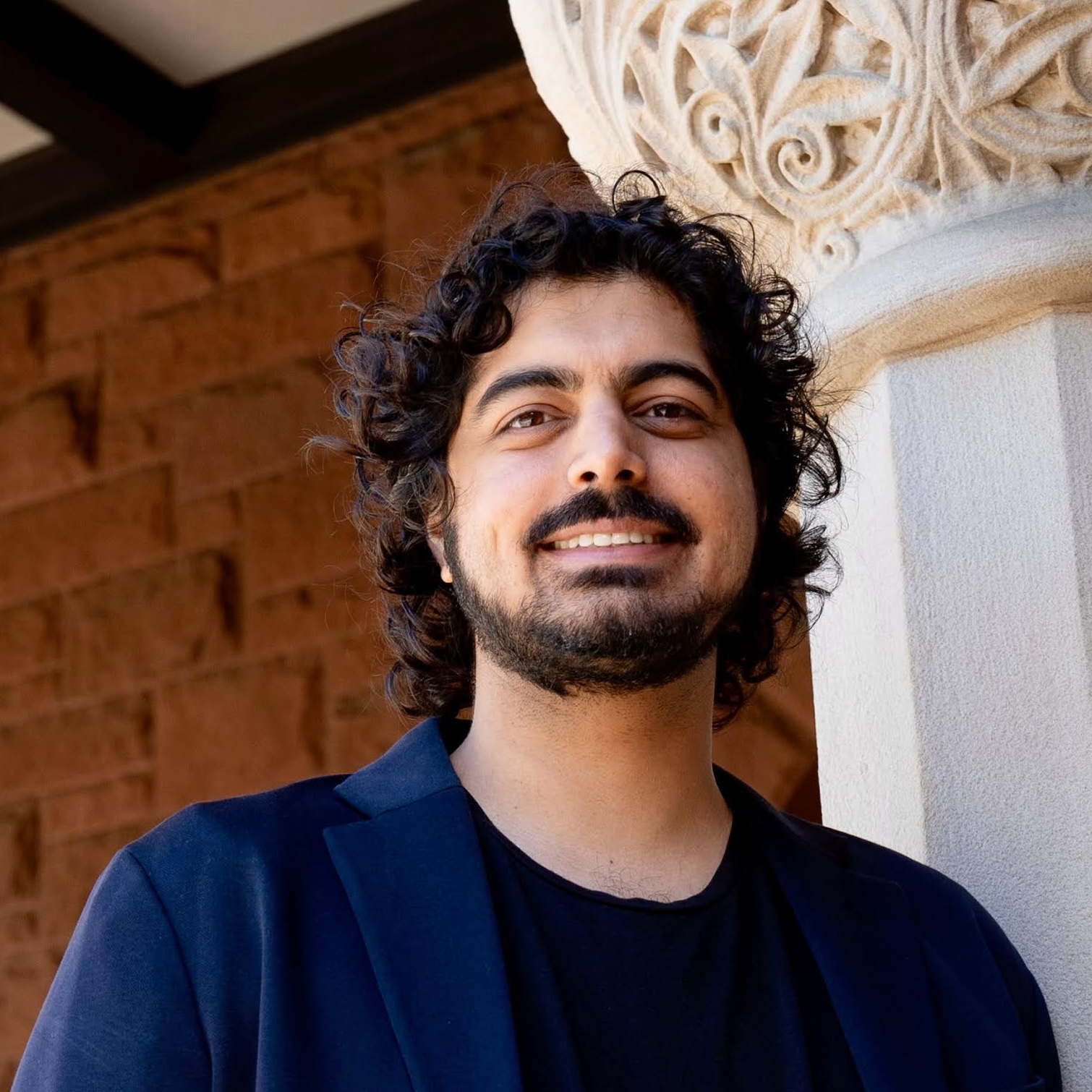
Hello! I am an assistant professor of political science at Stanford. My research is on the contemporary and 20th-century political economy of the United States.
I received a Ph.D. in economics from Harvard in 2025. Before that, I was a graphics editor at The New York Times, and before that, I studied physics and economics at UC Berkeley.
Working papers
Political Sorting in the U.S. Labor Market: Evidence and Explanations
with Martin Koenen
[Abstract]
We study political sorting in the labor market and examine its sources. Merging voter file data and online résumés to create a panel of 34.5 million people, we show that Democrats and Republicans choose distinctive career paths and employers. This leads to marked segregation at the workplace: a Democrat or Republican's coworker is 10% more likely to share their party than expected. Then, we ask whether segregation arises because jobs shape workers' politics or because workers' politics shape their job choices. To study the first, we use a quasi-experimental design leveraging the timing of job transitions. We find that uncommitted workers do adopt the politics of their workplace, but not workers who were already registered Democrats or Republicans. The average effect is too small to generate the segregation we document. To study the second, we measure the intensity of workers' preferences for politically compatible jobs using two survey experiments motivated by the observational data. Here, we find that the median Democrat or Republican would trade off 3% in annual wages for an ideologically congruent version of a similar job. These preferences are strong enough to generate segregation similar to the observed levels.
The Effect of Childhood Environment on Political Behavior
with Jacob R. Brown, Enrico Cantoni, Martin Koenen, and Vincent Pons
[Abstract]
We estimate the effect of childhood environment on future political behavior. Linking national voter files to Census Bureau and commercial address data, we compare children who moved between the same counties but at different ages. Growing up in a county where their peers are 10 p.p. more likely to affiliate with the Republican Party makes children 4.7 p.p. more likely to do so. The effects are similar for Democratic affiliation and slightly larger for registration and turnout. Exposure during adolescence is especially influential and effects decay slightly after the first election. They reflect both state-level factors and more local forces.
Publications
Zero-Sum Thinking and the Roots of U.S. Political Differences
with Nathan Nunn, Sandra Sequeira, and Stefanie Stantcheva
American Economic Review, March 2026
[Abstract] [Preprint]
We investigate the origins and implications of zero-sum thinking: the belief that gains for one individual or group tend to come at the cost of others. Using a new survey of 20,400 US residents, we measure zero-sum thinking, political preferences, policy views, and a rich array of ancestral information spanning four generations. We find that a more zero-sum mindset is strongly associated with more support for government redistribution, race- and gender-based affirmative action, and more restrictive immigration policies. Zero-sum thinking can be traced back to the experiences of both the individual and their ancestors, encompassing factors such as the degree of intergenerational upward mobility they experienced, whether they immigrated to the United States or lived in a location with more immigrants, and whether they were enslaved or lived in a location with more enslavement.
Vanguard: Black Veterans and Civil Rights After World War I
with Desmond Ang
The Quarterly Journal of Economics, February 2026
[Abstract] [Preprint]
Nearly 400,000 Black men were drafted into the National Army during World War I, where they toiled primarily as menial laborers in segregated units. Leveraging novel variation from the World War I draft lottery and millions of digitized military and NAACP records, we document the pioneering role these men played in the early civil rights movement. Relative to observably similar individuals from the same draft board, Black men randomly inducted into the Army were significantly more likely to join the nascent NAACP and become prominent community leaders in the New Negro era. We find little evidence that these effects are explained by migration or improved socioeconomic status. Rather, corroborating historical accounts about the catalyzing influence of institutional racism in the military, we show that increased civic activism was driven by soldiers who experienced the most discriminatory treatment while serving their country.
Work in progress
“Pure Americanism”: World War I and the Rise of the Ku Klux Klan
with Desmond Ang
[Abstract]
The post-World War I era witnessed a dramatic resurgence of the Ku Klux Klan, with membership swelling to millions across the United States. Assembling the largest known collection of Klan rosters, we show that the organization drew disproportionately from civic and professional elites — public administrators, law enforcement officers, and medical professionals — with veterans significantly overrepresented in its ranks. Digitizing tens of millions of military records and reconstructing the national draft lottery, we demonstrate the causal impact of military service in fueling the Klan's rise. White men randomly inducted into the military were more than twice as likely to join the KKK as comparable undrafted men from the same area. These effects were accompanied by other nativist shifts — as revealed by spousal choice, child naming, and party affiliation — but not by increased fraternal participation or economic status. Examining variation in soldiers' training camps, units, and roles, we find suggestive evidence of the mediating role of nationalistic indoctrination, racial threat, and peer exposure. Leveraging detailed pre-war address records, we document significant spillovers at multiple geographic levels, both within veteran households and across their neighborhoods. Our findings illuminate how military service shaped racial attitudes and fueled the spread of white supremacy in early 20th-century America.
Other projects
The New York Times
The Washington Post
The Los Angeles Times
More